- This topic is empty.
-
AuthorPosts
-
14/08/2026 at 16:59 #6107
For an equipment rental business, cost-effectiveness is a revenue question before it is a purchase question. A unit that costs 20% less and hires 30% fewer weeks is not cheaper. The comparison that matters is margin per unit per year, and capital cost is only one input to it.
This piece works through the cost lines that actually move, then applies them to MPMC’s HBD-R Series as a worked example. The HBD-R Series is a mobile battery energy storage system built for the rental market and for pairing with diesel generator sets, so the questions that follow are rental-asset questions: how often a unit goes out on hire, what it costs to keep working, and what it is worth at the end.
The Four Lines That Decide the Answer
Cost line
Typical share of the picture
What moves it
Capital cost
Visible but usually not decisive
Capacity, power rating, cooling method, enclosure
Utilisation
The largest single lever
Compatibility with generator sets already in stock, transport ease, range fit against demand
Service and downtime
Frequently underestimated
Parts availability, remote diagnostics, repair turnaround
Residual value
Ignored until disposal
Brand recognition in the secondary market, battery state of health record
Utilisation dominates. A unit hired 40 weeks a year at a modest rate returns more than one hired 22 weeks at a premium rate, and utilisation is driven mostly by how easily the unit fits into jobs the rental business is already winning.
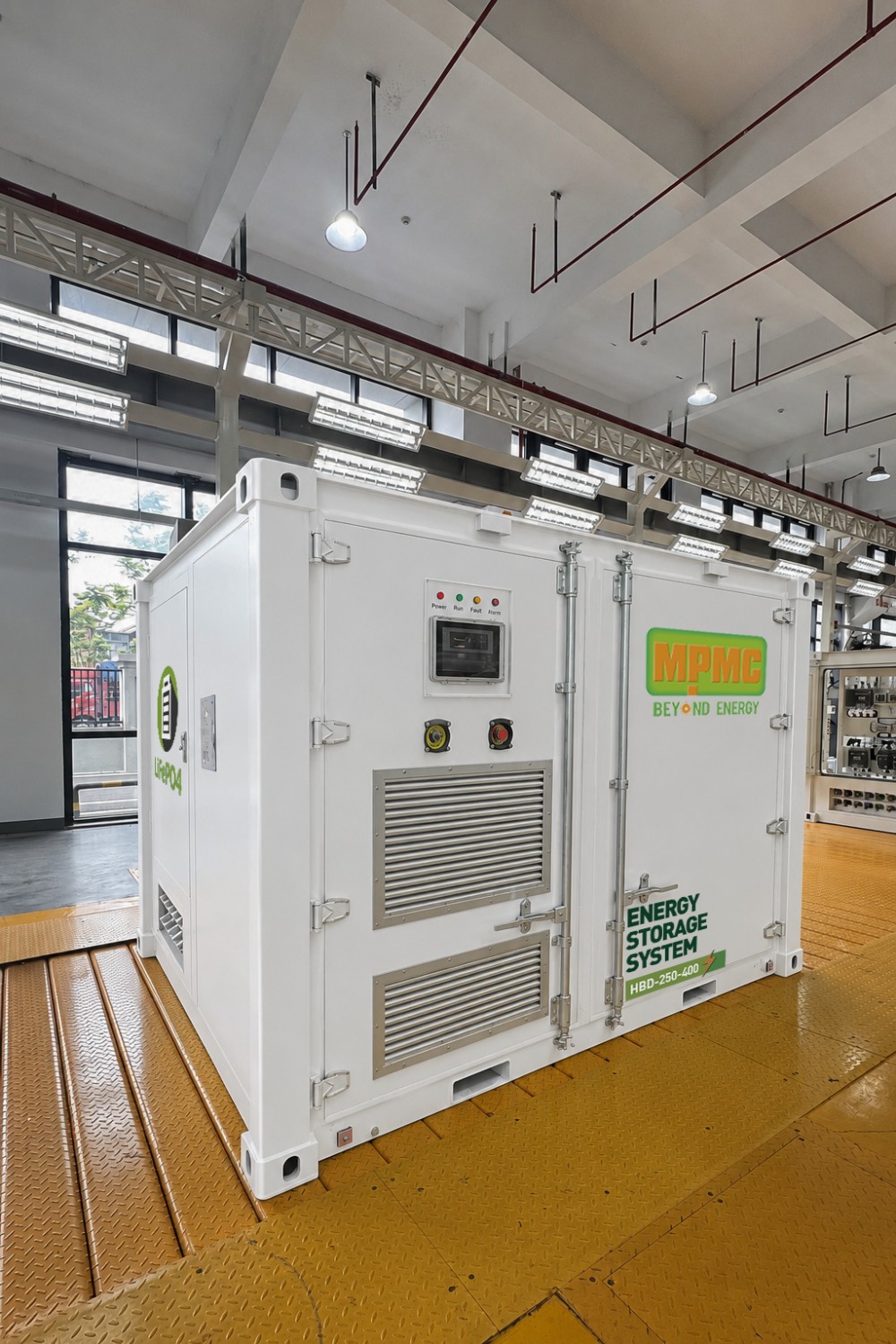
MPMC HBD-R Series, HBD-250-400. 250 kW continuous AC power, 450.2 kWh capacity, with forklift pockets and a standard container footprint.
Why Cost per kWh Is the Wrong Headline Comparator
Two units at the same price per kWh can behave completely differently on hire.
Power rating changes the addressable jobs
MPMC lists the HBD-100-200 at 100 kW and 225.1 kWh, and the HBD-200-200 at 200 kW and 203.5 kWh. The second carries less energy but twice the power, so it wins jobs the first cannot serve at any price.
Cooling method changes where it can work
MPMC lists HVAC cooling on the smaller HBD-R models and LCAC liquid cooling from the HBD-200-200 upward. Hot-climate and dusty deployments narrow the field.
Connection format changes crew time
MPMC lists PowerLock and CEE plug-and-play connections. Every hour of on-site connection labour is a cost the rental company absorbs or passes on.
Generator Set Compatibility Is a Cost Line, Not a Feature
The most expensive incompatibility in a rental business is a battery that cannot communicate with the generator controllers already in stock. It converts an automatic hybrid cycle into a manual one, which means either a bespoke interface on every job or a unit that only hires as a standalone.
MPMC lists HBD-R compatibility with DSE, ComAp, DEIF, Woodward, Smartgen and CAT EMCP controllers. A rental operator should list the controllers already in its own inventory by brand and model and confirm each one before purchase rather than accepting the list at face value.
Two further compatibility checks carry cost:
• Cable and connector types against the rental company’s existing inventory, since new cable sets are a hidden capital line.
• Transport format against the rental company’s existing trailers and lifting equipment.
The HBD-R Range Read Commercially
Model
Continuous AC power
System energy at 25°C
Cooling
Typical hire position
HBD-30-60
30 kW
61.44 kWh
HVAC
Small sites, welfare and overnight silent cover
HBD-50-100
50 kW
112.5 kWh
HVAC
The volume model for most construction hire
HBD-100-200
100 kW
225.1 kWh
HVAC
Larger sites and longer restricted periods
HBD-200-200
200 kW
203.5 kWh
LCAC
Power-limited jobs and hot climates
HBD-250-400
250 kW
450.2 kWh
HVAC
Events and multi-day autonomy
HBD-400-400
400 kW
407 kWh
LCAC
Heavy temporary power
HBD-610-610
610 kW
610.6 kWh
LCAC
Large events and industrial temporary supply
MPMC lists 6,000 cycles at 90% depth of discharge across the series and an operating range of −20°C to +50°C. Warranty is published as 3 years or 1.6 MWh/kWh total output for the system, with a 5-year or 2.57 MWh/kWh battery performance warranty and end-of-life capacity retention of at least 70%.
The throughput dimension of that warranty is the one a rental operator should model. A heavily utilised unit will approach the energy limit faster than a lightly used one, which shortens effective cover on exactly the units earning most.
Building the Case From Your Own Rental Data
Three inputs produce a defensible payback figure, and all three come from the rental company’s own records rather than from a supplier.
Achievable hire rate and weeks per year
Take the rate from comparable units already on hire and the utilisation from a similar product’s first two years, not from a best case.
Where the fuel saving lands
In hybrid hires the saving may sit with the customer, in which case the return comes through the hire rate rather than through cost reduction.
Avoided generator purchases
Where a battery lets the rental company serve a job with a smaller generator, the saving belongs in the case.
MPMC’s materials cite maintenance costs reduced by up to 50% compared with diesel-only alternatives and fuel savings of up to 75% in low-load scenarios. Both are comparative product-level figures from lightly loaded cases rather than guaranteed results, and a payback model built on them alone will be optimistic.
Two Cases With Published Numbers
A UK case listed by MPMC involved a 56 kW diesel generator serving a 3 to 6 kW office base load. Adding a 30 kW / 60 kWh HBD-R unit moved the refuelling interval from every two days to every seven and the maintenance interval from every ten days to every sixty. Those are servicing cost lines a rental business can price directly.
A Dubai batching plant case listed by MPMC records a very different profile: an HBD-500-1000 alongside three 500 kVA generator sets on a 24-hour operation, producing a daily fuel saving of 254.13 litres, a 10.56% reduction, with payback on the hybrid capital premium stated at 2 to 3 years.
The gap between those two outcomes is the point. Low-load sites produce large percentage savings. Heavily loaded sites produce modest ones. A rental company serving mostly the latter should build its case accordingly.
What Would Make This a Poor Investment
Being explicit about the failure cases protects the decision.
A rental business whose customers do not face noise restrictions, fuel cost pressure or emissions reporting will struggle to place the units, and utilisation collapses.
A rental business holding generator sets with controllers the battery cannot communicate with will need engineering input on every hybrid job, instead of simply sending the unit out.
A rental business buying the largest available capacity because it looks like better value per kWh will own units too heavy for its trailers and too large for its typical job.
Getting a Comparable Quotation
Ask every supplier for the same five things: usable energy rather than nominal capacity, the cycle rating with its depth of discharge, both warranty dimensions with exclusions, controller compatibility confirmed against a named list, and transport dimensions with weight and lifting points.
Quotations answering all five can be compared. Those answering three cannot, whatever the headline price says.
https://www.mpmc-group.com/
MPMC Powertech Corp. -
AuthorPosts

- You must be logged in to reply to this topic.