- This topic is empty.
-
AuthorPosts
-
06/11/2026 at 15:17 #6832
Published: November 2026 | By Hongye Engineering Team | 8 min read
A metering unit is bought against two numbers most tenders merge into one — frequency and insulation level — and they fail in different ways. Get the frequency wrong and the core saturates. Get the insulation level wrong and the unit dies in a dielectric test. In export work, 10 kV and 11 kV share one class; 13.8 kV does not.
Every 60hz prepaid metering unit for export grid order meets this eventually, usually after the drawings are approved: the buyer compares nameplate voltage with site voltage, sees 11 against 13.8, assumes it is close enough, and orders.
Hongye Electric Group Co., Ltd. builds both frequencies on the same line at Hengshui, so the differences below are line items, not thought experiments.
1. Specifying a 60hz prepaid metering unit for export grid
Three items sink a 60 Hz prepaid order, and none of them is the prepayment logic: core flux, meter timebase, and the frequency printed on the test certificate.
Flux density follows V/f. Raise frequency at constant voltage and flux falls, so a 50 Hz core on a 60 Hz grid sits 17% below design flux — cooler, quieter, with margin to spare. Reverse it and flux rises 20%, which on a core designed near 1.6 T pushes it past the knee: magnetising current climbs, no-load loss climbs, and the unit runs hot for life.
The rule is one-directional: 50 Hz equipment travels to a 60 Hz grid, and 60 Hz equipment does not travel back. Hongye builds the 50 Hz core as standard for export work and adds the 60 Hz rating at order stage.
The second failure is quieter. Meters that take their timebase from the supply — still common in cost-optimised prepaid designs — count cycles. A 30-minute demand window is 90,000 cycles at 50 Hz and 25 minutes at 60 Hz, so demand reads high and a time-of-use clock runs 20% fast, sliding every tariff window. Neither raises a code, so require a crystal-referenced clock and state the demand period in minutes, not blocks.
The third is the certificate. A CT type-tested at 50 Hz was not tested at 60 Hz, and secondary leakage reactance rises with frequency, so phase displacement moves up even where the unit stays inside its limit. Ask for the type test at the project frequency: a line on the order, not a redesign.
✅ Bottom line: 50 Hz cores work on 60 Hz grids; 60 Hz cores fail on 50 Hz ones. Buy the 50 Hz core and nameplate both.
2. 11kv 50hz vs 60hz metering transformer design: what changes inside
11kv 50hz vs 60hz metering transformer design differs in three places: core cross-section, secondary leakage reactance, and the accuracy class on the nameplate. Winding, ratio, insulation and terminals stay put.
Core area scales inversely with frequency, so a 60 Hz core needs about 83% of the iron. That is weight and money, and on a pole bracket a two-person lift instead of a three-person one. A 50/60 Hz marking is almost always the 50 Hz core with a second nameplate line: safe on both, priced at the heavier one. A 60 Hz-only build is lighter, cheaper, and cannot be re-exported to a 50 Hz country.
Leakage reactance is proportional to frequency, so the secondary circuit is 20% more reactive at 60 Hz. On a 15 VA, 5 A core with a resistive burden the ratio effect is small and the phase effect is real but usually inside a 0.2S limit. "Usually" is the problem: the manufacturer's certificate names one rated frequency, and a 50 Hz certificate does not cover 60 Hz operation. Specify a dual-frequency type test and the argument ends at FAT.
One item improves. At 60 Hz the same core holds 17% more flux margin, so instrument security factor and accuracy limit factor both get easier — the one direction where a standard product over-delivers. Hongye prints rated frequency and test frequency on the nameplate beside the class.
Then the nameplate language. IEEE C57.13 has no 0.2S class: it offers 0.3, 0.6 and 1.2, each tied to a burden in ohms — B-0.1 to B-1.8 at 0.9 power factor — with limits at 100% and 10% of rated current. IEC 0.2S is a percentage from 20% to 120% of current at 25–100% of a VA burden at 0.8 power factor. A specification asking for 0.3B-1.8 is not met, on paper, by a unit marked 0.2S 15 VA, even where the IEC unit measures better.
✅ Bottom line: Same winding, different iron and a different nameplate — specify the frequency you will run, not the one on the drawing.
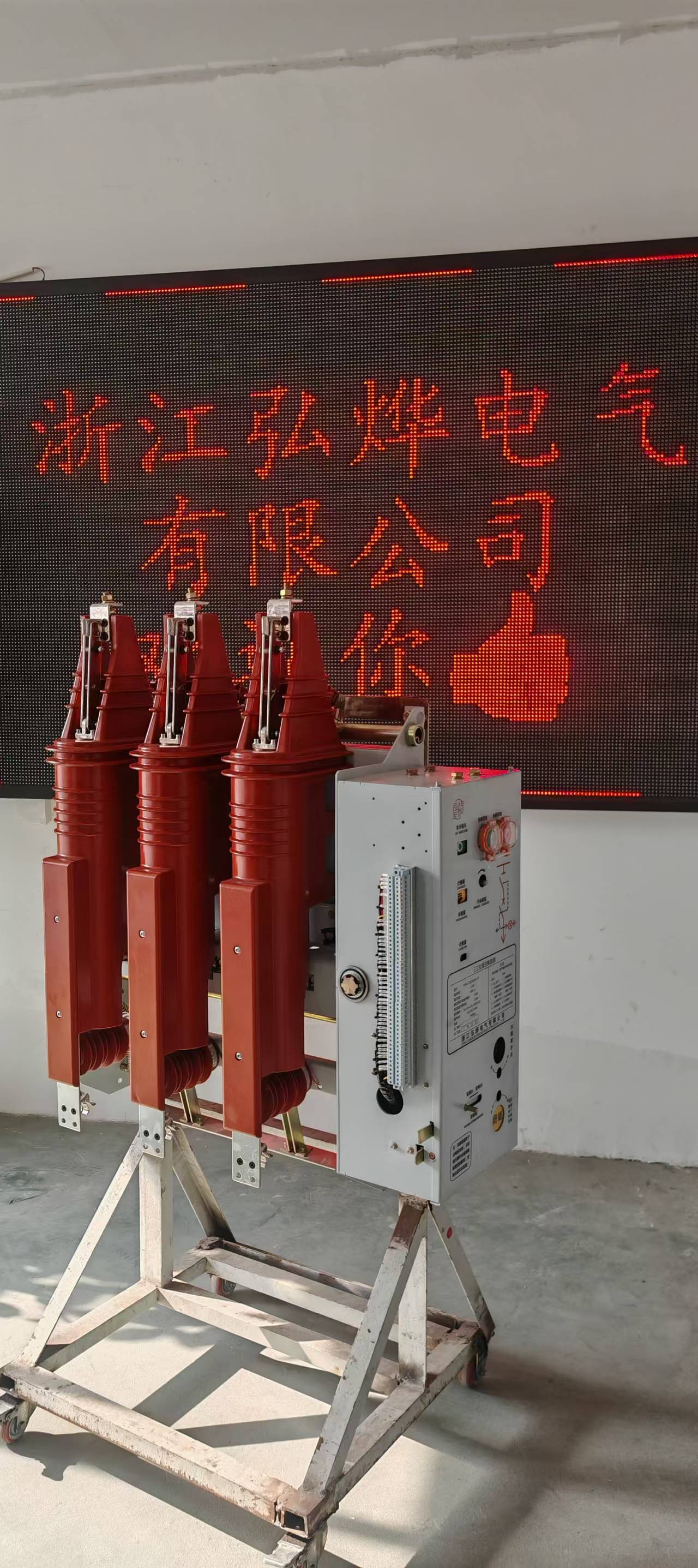
3. Rated insulation level 12kv metering unit selection in three steps
Rated insulation level 12kv metering unit selection starts from Um, the highest voltage for equipment, not the nominal kV in the project title. Um is standardised with few values; nominal voltage is a local convention.
• 10 kV and 11 kV — Um 12 kV, lightning impulse 75 kV, power-frequency withstand 28 kV. One class, two nameplates.
• 12.47 kV and 13.8 kV — Um 17.5 kV, 95 kV impulse, 38 kV power frequency.
• 20, 22 and 22.9 kV — Um 24 kV, 125 kV impulse, 50 kV power frequency.
• 33 and 34.5 kV — Um 36 kV, 170 kV impulse, 70 kV power frequency.
The first trap is arithmetic. A 10 kV nameplate on an 11 kV system is not a substitution, it is the correct unit — same Um, same test voltages. But 13.8 kV against 12 kV looks like 15% and is 27% in impulse withstand. The second trap: the ANSI 15 kV class carries 95 kV basic impulse level, identical to IEC 17.5 kV.
Creepage is not a function of voltage alone. IEC 60815 sets minimum nominal creepage at 16, 20, 25 and 31 mm per kV of Um for pollution levels I to IV — 192, 240, 300 and 372 mm on a 12 kV unit. A level II build suits inland Europe and is 20% short at a coastal site, where the flashover arrives on a humid night two years after commissioning. Hongye matches Um and creepage to the site, not to the tender's nominal kV.
Altitude is the last filter and the most often missed. External insulation loses withstand at roughly e raised to (H − 1000)/8150, so at 2,400 m the requirement is 19% higher — 75 kV becomes 89 kV, and the answer moves up to the 17.5 kV unit. Nairobi sits at 1,795 m, Addis Ababa at 2,355 m, Bogotá at 2,640 m. A sealed IP54 enclosure does not help; the bushings are outside it.
✅ Bottom line: Match Um first, then creepage for the site, then derate for altitude — nominal kV is the least reliable of the three.
Frequently asked questions
Q: Which markets actually need a 60hz prepaid metering unit for export grid at 11 kV class?
A: Fewer than the 60 Hz map suggests. Korea, the Philippines, Saudi Arabia, Taiwan, China and Japan run at 60 Hz, but their distribution classes are 22.9, 13.8, 13.8, 11.4, and 6.6 or 22 kV — so only Taiwan, China lands inside Um 12 kV, and the 13.8 kV markets are 17.5 kV territory. Check the utility's standard class before fixing Um.
Q: Can a 50 Hz metering unit be installed on a 60 Hz grid without a new type test?
A: Electrically yes, in almost every case: flux falls, thermal margin improves and the CT stays inside its class. Contractually no — the certificate names 50 Hz and an auditor may reject it. A dual-frequency type test at order stage satisfies both.
Q: How do I check a rated insulation level 12kv metering unit selection against a type test report?
A: Read four numbers on the report, not the cover: Um, impulse withstand in kV peak, power-frequency withstand in kV rms, and the test frequency. For Um 12 they read 12, 75, 28 and 50 or 60 Hz. Then check creepage against the pollution level in the specification.
Next step
Send the site's nominal voltage, frequency, pollution level and altitude and Hongye will return Um, impulse level, creepage and the core build that matches, with IEEE and IEC class side by side. Hongye Electric Group Co., Ltd. has manufactured instrument transformers and metering units at Hengshui since 2005, and quotes 50 Hz, 60 Hz and dual-rated builds as OEM assemblies with custom ratios from one factory. Bulk programmes are quoted the same way. Start from the metering unit range, or send the project data through our contact page. For the transformer matching the same V/f, see the cast-resin dry-type series.
http://www.honyeelec.com
Zhejiang Hongye Electric Co., Ltd. -
AuthorPosts

- You must be logged in to reply to this topic.