- This topic is empty.
-
AuthorPosts
-
27/11/2026 at 11:02 #7035
Efficient material movement plays an important role in modern industrial production. As factories expand their equipment layouts and handle increasingly diverse components, managing transportation routes becomes more challenging. Forklifts, manual handling, and conventional floor-supported lifting equipment can compete for the same workspace, creating congestion and reducing production flexibility.
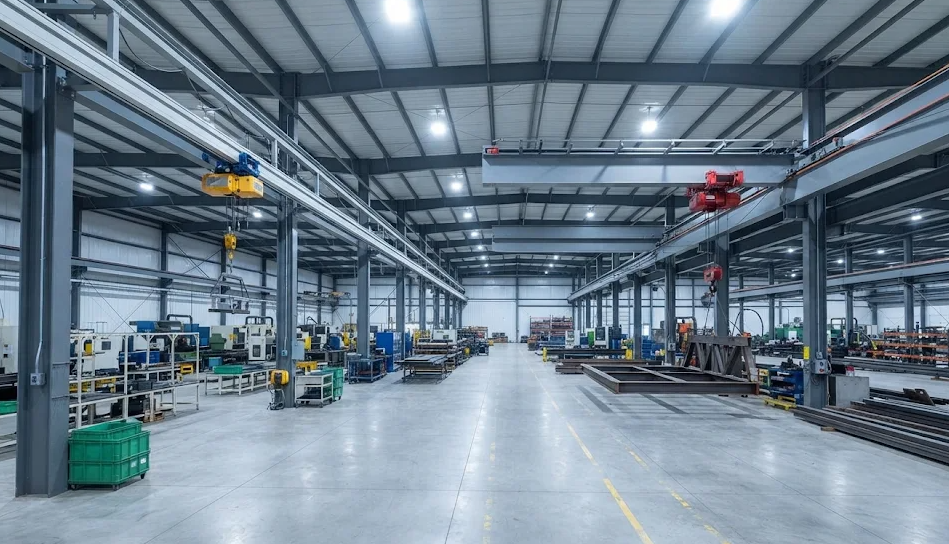
For facilities with suitable overhead structures, a suspension light crane system can provide an alternative approach. By using an overhead runway supported by the building structure, this type of lifting equipment helps keep floor areas more accessible while enabling materials to move between different workstations.
However, selecting an appropriate system requires more than checking its lifting capacity. Building conditions, transportation routes, operating frequency, and future production requirements all influence the final configuration.
1. Making Better Use of Available Factory Space
In many manufacturing workshops, floor space is shared by production machinery, raw materials, finished products, and transportation equipment. Adding conventional floor-mounted crane columns may further restrict equipment placement and reduce available movement space.
A suspension light crane system addresses this issue through an underslung runway arrangement. Instead of relying on independent floor-supported columns, the crane runway is suspended from suitable building beams or structural supports. This can reduce ground-level obstructions and provide greater flexibility when organizing production areas.
Goldcrane's Underslung EOT Crane solutions are designed for facilities that require overhead lifting while maintaining accessible floor space. Typical applications include assembly workshops, manufacturing plants, maintenance areas, and warehouses.
Before installation, however, the existing building structure must be assessed to determine whether its beams, connections, and supporting members can safely withstand the additional loads.
2. Understanding When to Choose an Underslung or Double Girder Crane
Different lifting requirements call for different crane structures. Choosing the wrong configuration may increase project costs or create limitations during daily operation.
An underslung EOT crane is often suitable for workshops where space utilization and overhead material transportation are major priorities. Its suspended runway arrangement can work well when the building structure allows the required installation and operating clearances.
By comparison, a double girder overhead crane is generally considered for heavier loads, demanding lifting cycles, and applications requiring a more substantial crane structure.
Goldcrane provides both crane categories. Its published double girder overhead crane specifications include lifting capacities from 3 to 100 tonnes and spans from 6.5 to 45.5 meters. These figures describe the double girder range and should not be treated as specifications for underslung cranes.
When comparing the two options, buyers should evaluate the maximum load, lifting height, available headroom, working duty, and building structure together. The best solution is the one that meets actual operational requirements without introducing unnecessary structural complexity.
3. Creating More Efficient Transportation Routes
Production delays do not always result from insufficient equipment capacity. In some factories, the main problem is the time and labor required to transfer materials between processing, assembly, inspection, and storage areas.
A properly planned suspension crane system can establish dedicated overhead transportation routes. Components can be lifted and transferred between workstations while forklifts and other ground-level equipment continue operating in their designated areas.
This arrangement may help reduce repeated manual handling and improve coordination between production processes. It is particularly useful when materials follow relatively consistent routes or need to be positioned at specific workstations.
Goldcrane's underslung crane solutions offer floor control and remote control options, allowing customers to consider different operating methods based on workshop layout and operator requirements.
To achieve better handling efficiency, manufacturers should identify frequent transfer points, material dimensions, movement distances, and required positioning accuracy before finalizing the runway layout.
4. Addressing Installation Challenges in Existing Buildings
Retrofitting a crane into an operating factory can be more complicated than installing equipment in a newly constructed facility. Roof beams, lighting systems, ventilation ducts, production machinery, and electrical installations may all affect the available installation space.
A suspension crane system needs sufficient structural support and clearance throughout its operating path. Engineers should evaluate beam strength, suspension connections, load distribution, dynamic forces, and the condition of the existing building structure.
Other factors also deserve attention, including hook height, runway length, power supply arrangements, and access for inspection and maintenance.
For facilities with irregular layouts, the runway configuration should reflect actual material transportation requirements rather than simply follow the available building geometry. Careful planning can reduce installation conflicts and help prevent restrictions during future production operations.
5. Key Considerations Before Ordering a Suspension Light Crane System
Before requesting a quotation, industrial buyers should prepare several essential technical details:
-
Maximum lifting load: Include the weight of lifting accessories and consider the heaviest expected operating condition.
-
Building structure: Confirm whether the existing beams, connections, and suspension points can support the proposed crane system.
-
Working coverage: Define the required runway length, travel routes, and material transfer locations.
-
Operating frequency: Determine daily working hours and lifting cycles to establish suitable equipment duty requirements.
-
Safety configuration: Review braking arrangements, lifting and travel limit switches, overload protection where specified, and applicable safety standards.
-
Maintenance and support: Consider installation guidance, operator training, spare parts availability, and long-term technical assistance.
Providing these details during the procurement stage helps suppliers develop a more suitable configuration and reduces the possibility of costly modifications after installation.
Conclusion
A well-planned overhead lifting system can improve factory logistics while making more effective use of existing production space. For facilities with suitable supporting structures and relatively flexible lifting requirements, a suspension light crane system offers a practical way to move materials above floor-level operations.
When heavier loads or more demanding lifting conditions are involved, a double girder overhead crane may provide a more appropriate solution.
With its underslung EOT crane and double girder overhead crane options, Goldcrane helps industrial buyers assess different lifting configurations according to load requirements, building conditions, and production workflows. Selecting the right system from the beginning can support more efficient material handling and reliable long-term operation.
http://www.goldcraneglobal.com
Goldcrane Co., Ltd. -
-
AuthorPosts

- You must be logged in to reply to this topic.