- This topic is empty.
-
AuthorPosts
-
27/11/2026 at 16:56 #7070
Choosing the right materials is one of the most important decisions in padel racket manufacturing. Material selection directly affects racket weight, stiffness, impact resistance, vibration transmission, and overall playing characteristics. For manufacturers developing padel rackets for different market segments, the challenge is not simply selecting high-strength materials but balancing structural performance, production consistency, and cost efficiency.
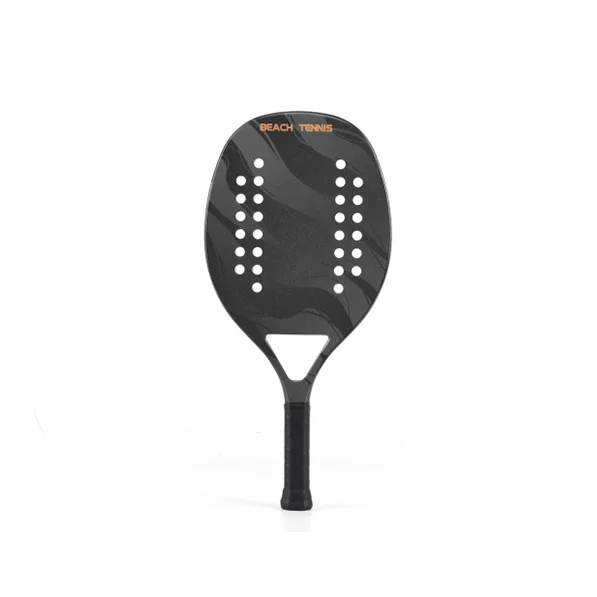
A well-designed padel racket must withstand repeated ball impacts while maintaining a predictable response throughout its service life. Whether the target product is an entry-level racket for recreational players or a premium model for competitive use, the combination of a composite frame, hitting surface, and internal core determines how the racket performs under actual playing conditions.
Why Material Selection Matters in Padel Racket Manufacturing
A padel racket typically consists of three main structural components: the frame, the hitting surface, and the internal core. Each component serves a different mechanical function, and their interaction determines the final product's performance.
The frame provides structural support and helps maintain the racket's overall geometry during repeated impacts. The hitting surface transfers ball impact forces into the racket structure, while the core influences rebound characteristics, vibration absorption, and playing comfort.
Composite materials are widely used in modern padel racket production because they offer a combination of low weight, mechanical strength, and design flexibility. Fiberglass and carbon fiber are two common reinforcement options, but they produce different performance characteristics.
Fiberglass generally provides greater flexibility and a softer impact response. It is suitable for recreational rackets where comfort, forgiveness, and manufacturing cost are important considerations. Carbon fiber offers a higher stiffness-to-weight ratio, making it appropriate for rackets requiring greater structural rigidity, more direct ball response, and improved weight distribution.
However, carbon fiber is not automatically the best choice for every application. Excessive stiffness can create a harder playing sensation, while an unsuitable layup structure may increase manufacturing costs without delivering meaningful performance improvements. The optimal material configuration depends on the intended player profile and racket design.
Fiberglass vs. Carbon Fiber: Which Is Better for a Padel Racket?
The choice between fiberglass and carbon fiber should be based on the required mechanical properties rather than material specifications alone.
Performance Factor
Fiberglass
Carbon Fiber
Material stiffness
Generally lower
Generally higher
Impact response
Softer and more flexible
More direct and rigid
Weight efficiency
Moderate
High
Vibration characteristics
Can provide a softer feel
Depends on layup and core design
Manufacturing cost
Generally lower
Generally higher
Typical application
Recreational and mid-range rackets
Performance and premium rackets
For entry-level products, fiberglass-faced construction can provide a practical balance between production cost and playing comfort. It also offers manufacturers flexibility when developing rackets for beginners who may prefer a more forgiving response.
For advanced products, carbon fiber reinforcement can improve structural rigidity while controlling overall weight. Different carbon fiber grades and fiber orientations can be selected according to the required stiffness and impact behavior. For example, a higher-modulus carbon fiber may help achieve greater rigidity, but its application must be evaluated against impact resistance, manufacturing requirements, and the desired feel.
Some manufacturers also combine fiberglass and carbon fiber within the same structure. This hybrid approach allows different reinforcement materials to perform complementary functions, helping optimize the balance between flexibility, stiffness, durability, and cost.
How the EVA Core Influences Padel Racket Performance
The internal foam core is another critical factor in padel racket engineering. EVA (Ethylene Vinyl Acetate) foam is commonly used because its density, hardness, and elastic recovery can be adjusted to achieve different playing characteristics.
A softer EVA core generally provides greater deformation under ball impact, which can contribute to a comfortable feel and easier ball control. It is often suitable for recreational players and products designed around comfort.
A harder EVA core typically produces a firmer response and a more direct impact sensation. Depending on the formulation and structural design, it may be preferred in rackets intended for players seeking a more responsive hitting experience.
Core selection should consider more than hardness. Foam density, cell structure, compression behavior, and recovery characteristics all influence performance. If the core is too soft, excessive deformation may reduce response consistency. If it is too hard, the racket may transmit more impact vibration to the player's hand.
The relationship between the core and the hitting surface is equally important. A stiff carbon fiber face combined with a soft EVA core behaves differently from a fiberglass face paired with a high-density core. Therefore, manufacturers should evaluate the complete composite structure rather than optimizing individual materials independently.
Structural Design and Manufacturing Quality Control
Material quality alone cannot guarantee a reliable padel racket. Manufacturing processes determine whether the selected materials achieve their intended mechanical properties in the finished product.
Composite layup is particularly important. Fiber orientation, layer quantity, resin distribution, and laminate thickness influence stiffness and load transfer. Inconsistent fiber placement can create localized weak areas, while excessive or insufficient resin may affect weight, bonding strength, and structural integrity.
Mold temperature, curing time, and pressure also require controlled production conditions. Inadequate curing can result in insufficient bonding between composite layers, while excessive processing temperatures may affect resin performance. These issues can lead to delamination, surface defects, or inconsistent product characteristics.
Several quality checks should be incorporated into padel racket production:
-
Weight and dimensional inspection: Verify overall weight, thickness, balance, and dimensional tolerances against product specifications.
-
Bonding inspection: Check the adhesion between the frame, face materials, and core to reduce the risk of separation during repeated use.
-
Impact resistance testing: Evaluate structural integrity under repeated impact conditions representative of actual playing environments.
-
Surface and visual inspection: Identify air bubbles, resin defects, uneven finishes, and other manufacturing inconsistencies.
-
Performance consistency testing: Compare rebound response, stiffness, and vibration characteristics across production batches.
For manufacturers supplying international markets, maintaining consistent production records and inspection standards is particularly important. A racket that performs well in a prototype sample must also maintain comparable characteristics throughout mass production.
How to Develop a Padel Racket for Different Market Segments
Different player groups require different combinations of material properties, weight distribution, and core characteristics. A single construction specification may not satisfy every market segment.
For beginner-oriented rackets, manufacturers can prioritize manageable weight, comfortable impact response, and a forgiving hitting sensation. Fiberglass surfaces combined with appropriately selected EVA foam are a practical starting point.
For intermediate players, hybrid fiberglass-carbon fiber structures can offer a balance between control, responsiveness, and durability. Adjusting the fiber layup and core hardness provides additional opportunities to differentiate product performance without completely changing the production platform.
For advanced and competitive players, carbon fiber construction may be preferred where greater stiffness, controlled ball response, and optimized structural weight are required. However, the final configuration should be validated through prototype testing rather than relying exclusively on material grades.
Customization also plays an important role in product development. Manufacturers may need to adjust racket shape, thickness, surface texture, weight distribution, material combinations, and visual finishes to meet different brand specifications and market requirements.
Choosing a Reliable Padel Racket Manufacturing Partner
Developing a competitive padel racket requires more than access to fiberglass, carbon fiber, and EVA foam. Manufacturers need to understand how composite materials behave during processing and how structural design influences the finished product.
A manufacturing partner with experience in composite sports equipment can provide practical support in material selection, prototype development, structural optimization, and production quality control. This is particularly valuable when developing multiple product specifications for different markets.
Established in September 2017, our factory specializes in the research, development, and production of composite material products. With approximately 70 employees and a 4,000-square-meter production facility, we have developed manufacturing experience across a range of composite sports and recreational products, including ice hockey sticks and beach paddles.
Our production capabilities and continuous product development efforts support customers seeking reliable composite product manufacturing and customized solutions. By focusing on material performance, process improvement, and production consistency, we aim to help partners develop padel rackets that meet their intended structural and playing requirements.
Conclusion
Selecting the right materials for a padel racket requires a comprehensive understanding of composite reinforcement, EVA core properties, structural design, and manufacturing processes. Fiberglass offers flexibility and cost advantages, while carbon fiber provides opportunities for higher stiffness and weight optimization. Hybrid structures can further balance these characteristics when properly engineered.
For consistent product quality, material selection must be supported by controlled composite processing, bonding inspection, dimensional verification, and impact testing. Manufacturers that integrate these factors into product development are better positioned to deliver padel rackets with reliable performance, competitive production costs, and consistent quality across different market segments.
http://www.ztscarbon.com
APOLAR (DONGGUAN) SPORTS EQUIPMENT CO., LTD. -
-
AuthorPosts

- You must be logged in to reply to this topic.