- This topic is empty.
-
AuthorPosts
-
20/11/2026 at 17:13 #6956
In industrial solid-liquid separation, plate and frame filter paper directly influences filtration speed, particle retention, filter cake formation, and the stability of the entire production process. Whether used for industrial oil purification, chemical liquid clarification, or food processing, filter paper must maintain consistent permeability while retaining the solid particles generated during filtration. A mismatch between filter media and process conditions can result in frequent clogging, extended filtration cycles, uneven filter cakes, or reduced filtrate quality. Choosing the right filter paper requires a technical evaluation of material structure, liquid characteristics, operating pressure, and the filtration objectives of the application.
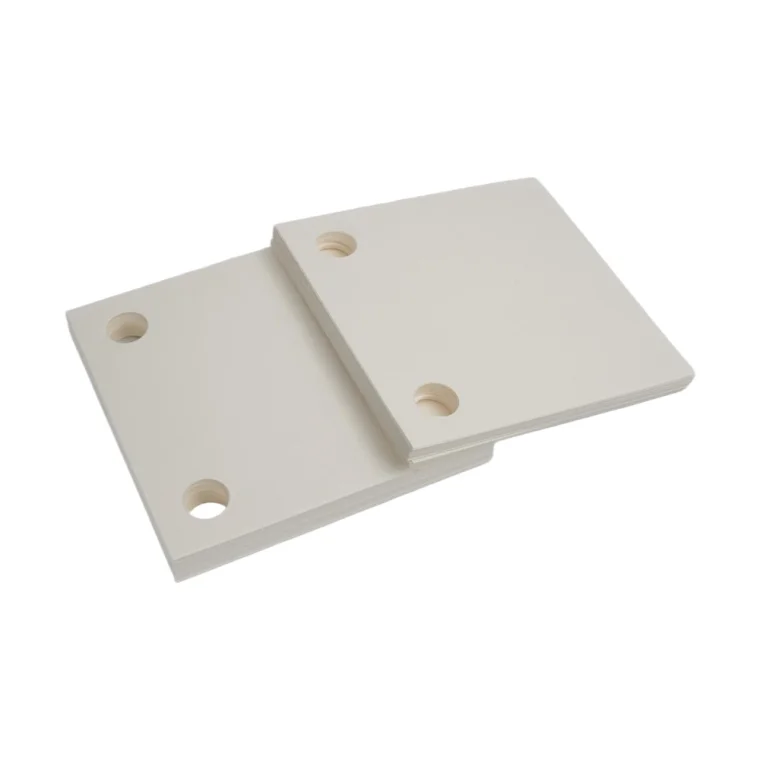
For manufacturers operating plate and frame filter presses, the challenge is to achieve an effective balance between filtration precision and throughput. Filter paper that captures very fine particles may create excessive resistance, while highly permeable media may allow unwanted solids to pass through. The correct solution depends on the relationship between the slurry, filter press design, and the physical properties of the filter paper.
Understanding Filtration Performance in Plate and Frame Filter Presses
A plate and frame filter press works by feeding slurry into chambers formed between filter plates and frames. Under applied pressure, the liquid component passes through the filter media, while suspended solids accumulate on the surface to form a filter cake. As filtration continues, the cake itself becomes an additional filtration layer, influencing flow resistance and particle retention.
This means filtration performance is determined by both the filter paper and the developing filter cake. During the initial stage, the paper's fiber structure and permeability play a major role in controlling liquid passage and particle capture. As solids accumulate, the cake structure increasingly affects filtration speed. Fine or compressible particles may form a dense layer that restricts flow, even when the original filter paper has relatively high permeability.
For this reason, evaluating filter paper only by its nominal filtration rating can be misleading. A suitable grade should be assessed under representative slurry conditions, including solids concentration, particle size distribution, liquid viscosity, and operating pressure. The objective is to achieve stable filtrate quality without unnecessarily extending each filtration cycle.
How Filter Paper Structure Affects Industrial Filtration
The performance of plate and frame filter paper begins with its fiber composition and formation process. Fiber length, fiber distribution, bonding characteristics, and sheet uniformity influence the paper's pore structure, strength, and permeability. A uniform fiber network helps reduce localized weak points and supports more consistent filtration across the sheet.
Filtration retention is particularly important when the process requires the removal of fine suspended particles. A tighter fiber structure can improve particle interception, but it may also increase pressure drop and accelerate surface blockage. In contrast, a more open structure can support higher liquid flow rates, especially in applications involving larger particles or relatively low solids concentrations. Neither structure is universally superior; the correct choice depends on the required separation result.
Paper thickness and basis weight should also be considered together. Thicker media may provide greater depth for particle retention, depending on the fiber structure, but excessive thickness can affect flow resistance and compatibility with the filter press chamber. Basis weight describes the mass per unit area and helps characterize material consistency, but it cannot independently predict filtration performance.
Wet strength is another essential property. Filter paper operates in a saturated condition and is subjected to pressure differences, handling forces, and filter cake removal. If the sheet loses structural integrity when wet, it may tear, stretch, or become damaged during operation. These failures can interrupt production and allow unfiltered liquid or solids to bypass the intended filtration path.
Selecting Filter Paper for Different Process Conditions
Industrial oil filtration requires media that can capture contaminants while maintaining sufficient flow through liquids with varying viscosities. Lubricating oils and hydraulic oils may contain metallic particles, carbon residues, oxidation products, and other suspended contaminants. A filter paper grade suitable for low-viscosity oil may not deliver the same flow performance with heavier oil, particularly at lower operating temperatures. Selection should therefore account for oil viscosity, operating temperature, target particle retention, and the acceptable filtration cycle time.
Chemical filtration introduces additional compatibility requirements. Process liquids may contain acids, alkalis, solvents, or other substances that affect fiber stability and material strength. Filter paper should be selected according to the actual chemical composition, concentration, and operating temperature. Compatibility testing is especially important when filtration involves aggressive liquids or long contact periods.
Food-grade filtration has a different set of priorities. In addition to filtration performance, the material must meet the relevant food-contact requirements for its intended application. Liquid composition, processing temperature, and the applicable regulatory framework should all be considered. A general industrial filter paper should not automatically be used in food processing without confirming the required documentation and suitability.
Laboratory qualitative and quantitative analysis papers serve analytical applications where characteristics such as particle retention, ash content, and consistency are important. These products have different performance objectives from filter press media and should be selected according to the relevant analytical method rather than assumed to be interchangeable with industrial filtration grades.
Diagnosing Common Filter Press Problems
When filtration speed decreases, the first step should be to identify whether the restriction comes from the filter paper, slurry, or equipment settings. High solids concentration, fine particles, elevated liquid viscosity, and excessive cake compression can all contribute to reduced flow. If the filter paper is too dense for the application, particles may accumulate rapidly at the surface, creating a high-resistance layer. A more permeable grade may improve throughput, provided that the required filtrate clarity can still be maintained.
If the filtrate contains visible particles, possible causes include unsuitable retention characteristics, damaged filter paper, incorrect sheet positioning, or leakage around the plate sealing surfaces. Inspection should cover the entire filtration assembly rather than focusing exclusively on the media specification. In some cases, the problem is caused by inconsistent installation or worn equipment components.
Uneven filter cake formation may indicate differences in slurry distribution, feed pressure, chamber conditions, or filter paper installation. Tearing during operation may be associated with insufficient wet strength, unsuitable sheet dimensions, excessive pressure, or uneven mechanical loading. Replacing the filter paper without identifying the underlying cause may only provide a temporary improvement.
Why Batch Consistency Matters in Filter Paper Manufacturing
In continuous industrial operations, filter paper must perform consistently from one batch to another. Variations in basis weight, thickness, moisture content, fiber distribution, and sheet dimensions can affect pressure resistance, liquid flow, and installation accuracy. Even when two batches have the same nominal grade, differences in material uniformity may lead to changes in filtration time or filtrate quality.
A reliable manufacturing process should control raw material selection, fiber preparation, sheet formation, drying, finishing, and dimensional inspection. Relevant quality checks may include basis weight, thickness, tensile strength, wet strength, air permeability, moisture content, and appearance. For customized products, sheet dimensions and the intended filtration application should also be confirmed before production.
Nantong Tianjiao Filtration Materials Co., Ltd. has specialized in filter paper manufacturing since 1992, operating under the former name Haian Precision Filter Paper Factory. The company develops and produces food-grade filter paper, qualitative and quantitative analysis filter paper, industrial oil filter paper, and related filtration materials. Its manufacturing experience, accumulated process technology, and continued equipment upgrades support the development of different filter paper grades for industrial and analytical applications. The company also provides customized solutions and serves customers in Europe, America, and Southeast Asia.
How to Verify the Right Filter Paper Before Bulk Ordering
A practical selection process should begin with information about the actual filtration application. Key details include the liquid being processed, particle size distribution, solids concentration, viscosity, operating temperature, filtration pressure, filter press dimensions, and required filtrate quality. These details help narrow down the suitable material structure and performance range.
Sample testing should then compare filtration time, filtrate clarity, cake formation, paper integrity, and consumption per cycle. Where possible, different grades should be tested using the same slurry and operating parameters to ensure meaningful comparison. Buyers should also confirm technical specifications, dimensional tolerances, and batch quality requirements before moving to regular supply.
Ultimately, the right plate and frame filter paper is not necessarily the thickest, densest, or most permeable option. It is the material that delivers the required particle retention and filtration throughput while maintaining wet strength and operational stability. By matching paper structure to real process conditions and verifying performance through application testing, manufacturers can improve filter press efficiency, reduce avoidable downtime, and maintain more consistent production quality.
http://www.tianjiaofilter.com
Nantong Tianjiao Filtration Materials Co., Ltd. -
AuthorPosts

- You must be logged in to reply to this topic.